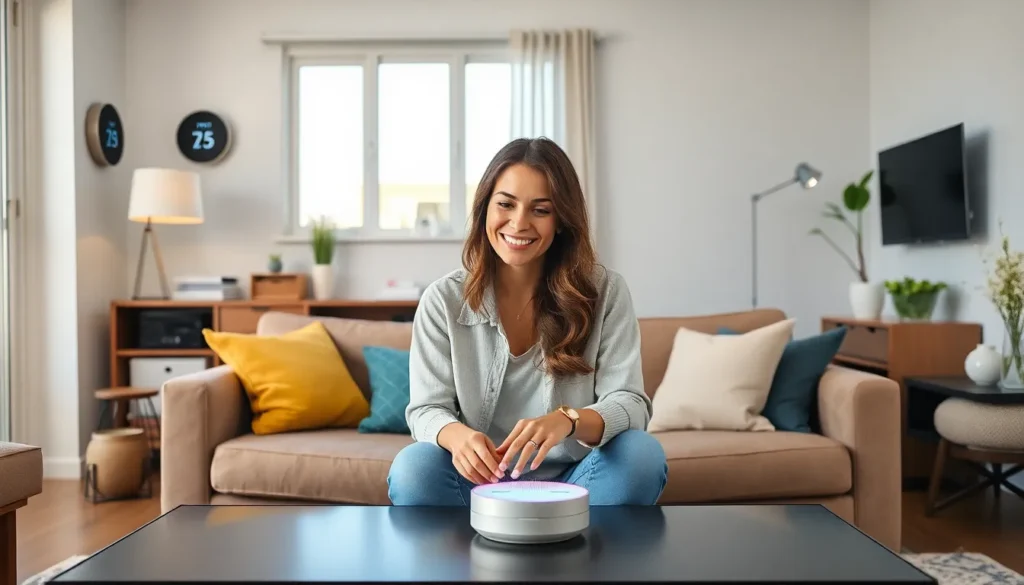
Imagine waking up in 2025 to a world where your coffee brews itself while your smart mirror gives you the day’s news and a pep talk. Sounds like a sci-fi movie, right? But this isn’t just wishful thinking; it’s the future knocking at your door. The next wave of technology is set to revolutionize daily life, making it more efficient, entertaining, and just plain cool.
Table of Contents
ToggleFuture Technologies to Anticipate
Innovative smart home gadgets will integrate seamlessly into daily routines. Voice-activated assistants will manage schedules, control home lighting, and adjust temperatures based on user preferences. Advanced home security systems will offer real-time monitoring and alerts, ensuring safety and peace of mind.
Health monitoring devices will become essential. Wearable technology will track fitness metrics and vital signs, alerting users to potential health issues. Personal health insights will connect with medical professionals for timely advice, making preventive care more efficient.
Autonomous vehicles will reshape transportation. These cars will reduce traffic accidents and improve commuting efficiency. Users will benefit from reduced travel times and increased safety on the roads, resulting in less stress during daily commutes.
Artificial intelligence will enhance personalized experiences. Content recommendations on streaming platforms will adapt to user preferences, creating a tailored viewing experience. Shopping habits will also shift as AI predicts needs and preferences, streamlining the purchasing process.
Smart cities will promote sustainability and connectivity. Urban infrastructure will utilize IoT technology to manage resources efficiently, reducing waste and improving public transportation. Citizens will experience enhanced quality of life through cleaner environments and better accessibility.
Robotics will revolutionize industries like healthcare. Robots will assist in surgeries and patient care, minimizing human error and enhancing recovery times. Automation will increase productivity across various sectors, leading to significant advancements in service delivery.
Each of these technologies will contribute to an interconnected ecosystem that promotes convenience, efficiency, and health in daily life by 2025.
Health Innovations
In 2025, health technology will significantly enhance personal wellness and medical care. Innovations in wearable devices and telemedicine will fundamentally change how individuals manage their health.
Wearable Health Monitors
Wearable health monitors will provide real-time data, tracking metrics like heart rate, sleep quality, and blood glucose levels. Such devices will connect users with healthcare providers, facilitating proactive management of chronic conditions. Sensors embedded in these devices will detect early signs of health issues, allowing for timely interventions. Expect manufacturers to design increasingly stylish options, making health monitoring more appealing. Features will include battery life improvements, ensuring consistent usage without constant recharging.
Telemedicine Advancements
Telemedicine advancements will reshape how patients interact with healthcare professionals. Video consultations will become routine, enabling convenient access to medical advice from home. Customized healthcare apps will allow easy communication with providers, streamlining appointment scheduling and prescription management. Enhanced security protocols will ensure patient data remains confidential while enabling seamless sharing of health records. Expect artificial intelligence to play a role in diagnosing conditions through symptom analysis, improving efficiency in care delivery. This shift toward virtual healthcare will enhance accessibility for individuals in remote areas.
Smart Home Devices
Smart home devices will significantly alter day-to-day living by 2025. Innovations in this area promise heightened convenience and enhanced living environments.
AI-Powered Assistants
AI-powered assistants will evolve into indispensable household companions. These devices will manage schedules, control smart appliances and offer personalized recommendations. Voice commands will simplify tasks, enabling users to access information hands-free. Integration with various platforms will provide seamless connectivity for entertainment, security and home automation. Predictive capabilities will allow assistants to suggest actions based on user habits, creating a tailored experience. Enhanced natural language processing will improve interaction, making communication feel more intuitive and human-like.
Energy Efficiency Solutions
Energy efficiency solutions will transform how homes consume power. Smart thermostats will learn user behaviors, automatically adjusting settings to optimize energy usage. These devices will provide real-time energy monitoring, allowing homeowners to track consumption and identify savings opportunities. Automated lighting systems will respond to occupancy, ensuring lights turn off in unoccupied spaces. By incorporating solar energy management, homes will utilize renewable resources for greener living. Device coordination will minimize energy waste, leading to reduced utility bills and a smaller carbon footprint. Enhanced energy analytics will support informed decision-making for better home management.
Transportation Revolution
Technological advancements are set to transform transportation by 2025, making it safer, faster, and more efficient.
Autonomous Vehicles
Autonomous vehicles are expected to dominate the roads in 2025. These self-driving cars rely on advanced sensors and AI algorithms to navigate safely. Reduced traffic accidents are a major benefit of this technology. Furthermore, these vehicles enhance commute efficiency by optimizing routes based on real-time traffic data. Fleet management will also improve with easier monitoring of vehicle conditions and locations. Regulatory frameworks will adapt to accommodate this innovation, ensuring safe integration into existing infrastructures. Increased public acceptance fosters a stronger shift towards using these vehicles for everyday travel.
Hyperloop Systems
Hyperloop systems promise rapid travel between cities by 2025. These high-speed transportation pods will travel at speeds exceeding 700 miles per hour. Magnetic levitation technology ensures a smooth ride while reducing travel time significantly. Passengers will enjoy direct routes without the delays commonly associated with trains and planes. Cost-effective maintenance and energy-efficient operations make these systems financially viable. The connection between cities will foster economic growth, while reduced environmental impact supports sustainable development. By promoting public transportation, Hyperloop systems will also decrease reliance on personal vehicles.
Education Transformation
Technology will reshape education by 2025, creating immersive learning experiences and fostering accessibility. Innovations like virtual reality will revolutionize classrooms, making learning engaging and interactive.
Virtual Reality Classrooms
Virtual reality classrooms will provide students with immersive educational experiences. Students can explore historical sites or conduct science experiments in a 3D environment. Engaging with complex concepts becomes easier in these dynamic settings, enhancing understanding and retention. Instructors can tailor lessons to individual needs, encouraging personalized learning paths. VR technology will ensure participation from students of diverse backgrounds, making education more inclusive and equitable. Schools will likely adopt this technology to prepare students for real-world challenges, giving them skills necessary for the future.
Lifelong Learning Platforms
Lifelong learning platforms will emerge as essential resources for personal and professional growth. Individuals can access courses from top universities and industry experts, fostering continuous skill development. Micro-credentials will focus on specific skills, allowing learners to showcase expertise in their fields. Flexible schedules enable busy professionals to engage with learning at their convenience. Additionally, these platforms will use AI to recommend courses tailored to individual career aspirations, ensuring relevant content access. Lifelong learning will become a norm, empowering individuals to navigate changing job markets with confidence.
The advancements anticipated for 2025 promise to reshape daily life in remarkable ways. From smart home devices to autonomous vehicles and immersive education technologies, these innovations will enhance convenience and efficiency while promoting health and sustainability.
As society embraces these changes, individuals can look forward to a future where technology seamlessly integrates into their routines, improving overall quality of life. The interconnected ecosystem emerging from these advancements will not only simplify tasks but also empower people to live healthier and more fulfilling lives. Embracing this technological evolution will be key to navigating the exciting landscape that lies ahead.